
A house rewire is disruptive work, but much of the disruption and expense comes from decisions made too late. The best time to think about lighting, sockets, home working, EV charging and future energy use is before the walls are closed again.
When might a home need rewired?
Age alone does not diagnose an installation. An inspection is the right way to understand its condition. Warning signs can include repeated tripping, damaged accessories, signs of overheating, inadequate earthing or wiring that has been altered repeatedly over many years.
Start with how the home needs to work
Walk through each room and think beyond simply replacing what is already there. Where will furniture sit? Where will phones and laptops charge? Are you planning an extension, heat pump, solar panels or an EV charger?
What happens during a rewire?
- Assessment and design: the existing installation and your requirements are reviewed.
- First fix: new cables and back boxes are installed before surfaces are made good.
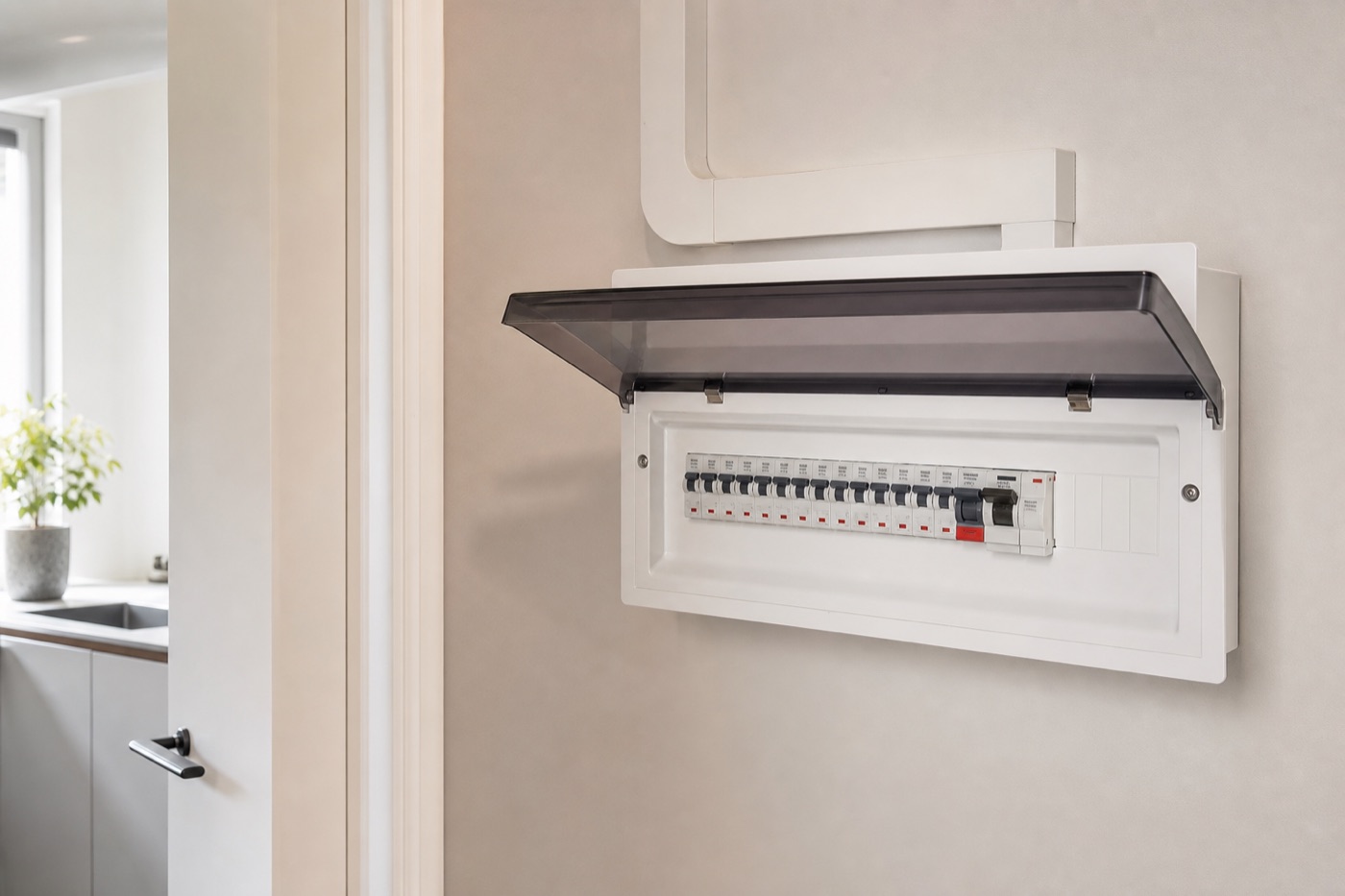
- Second fix: sockets, switches, fittings and the fuse box are connected.
- Testing and certification: the completed installation is inspected, tested and documented.
How disruptive is it?
Access may be needed beneath floors, above ceilings and inside walls. Furniture must be moved, power will be unavailable at times and decorating may be required afterwards. The exact disruption depends on the property and the agreed cable routes.
Questions to settle before accepting a quote
- What is included in making good?
- Who coordinates with the plasterer or other trades?
- Which fittings and finishes are included?
- What certification will be supplied?
- How will changes to the agreed design be handled?
Want a clear next step for your property?
Tell us what you need. Paul and the Wiredd team will review the details and explain what makes sense.
Start My Electrical Enquiry